How to Choose a Houston Calibration Lab: Seven Questions to Ask Before You Commit
A Houston manufacturer needs to calibrate dozens of instruments before an upcoming quality audit. Several laboratories offer competitive pricing, but their turnaround times, accreditation scopes, and technical capabilities differ.
One provider offers a lower quote but cannot calibrate every instrument on the list. Another has the necessary equipment but requires a longer turnaround. A third offers expedited service, although additional charges apply.
For the purchasing team, the decision involves more than comparing prices. Quality managers need reliable calibration results and documentation, while production teams depend on having equipment available when needed.
For companies evaluating Houston calibration services, asking the right questions before committing helps identify a laboratory equipped to meet their technical and operational requirements.
Southwest Calibration Service has served Houston-area manufacturers since 1988. Located in Stafford, Texas, our ISO/IEC 17025-accredited laboratory supports businesses throughout Greater Houston with precision calibration services, specialized technical expertise, and onsite service options.
The following seven questions offer a practical framework for evaluating prospective calibration providers.
1. Is the laboratory accredited for the instruments you use?
Accreditation is one of the most important qualifications to evaluate when selecting a calibration laboratory.
ISO/IEC 17025 is the international standard used to assess the competence of testing and calibration laboratories. Accredited providers undergo independent evaluations of their technical capabilities, measurement methods, personnel competency, and quality management systems.
Accreditation does not automatically apply to every service a laboratory offers.
Each accredited provider maintains a formal scope identifying the measurement disciplines, ranges, and capabilities covered by its accreditation.
Before selecting a laboratory, request its accreditation certificate and review the scope against your equipment requirements.
For example, a facility requiring accredited pressure and dimensional calibration should confirm that the provider’s scope includes the applicable measurement ranges and capabilities.
Some applications do not require accredited calibration. When customer contracts, regulatory requirements, or internal quality systems specify accreditation, confirming the appropriate scope becomes essential.
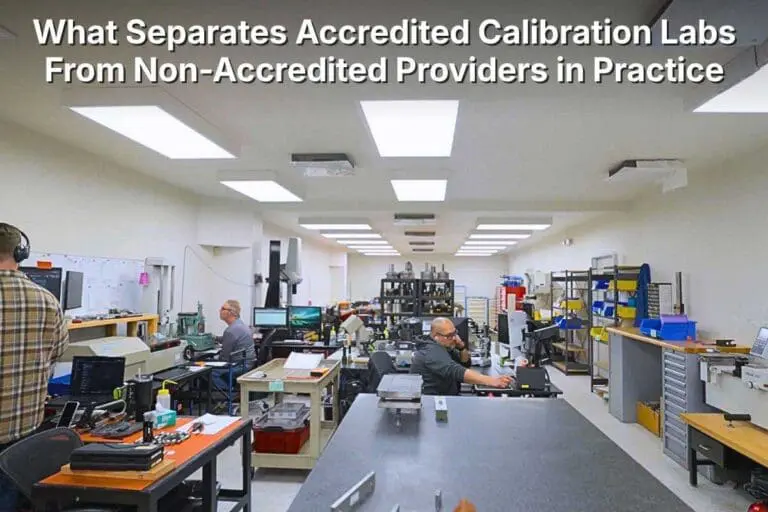
Our article on accredited versus non-accredited calibration laboratories explains these differences in greater detail.
Southwest Calibration Service has maintained ISO/IEC 17025 accreditation through ANAB continuously since 2007. Its 2026 ANAB assessment concluded with zero required corrective actions.
Manufacturers can review SWCAL’s accreditation certificate and scope to verify coverage for their specific instruments.
2. How long does calibration take?
Calibration turnaround directly affects equipment availability, production schedules, and inspection activities.
When critical instruments remain out of service longer than expected, manufacturers may need to rely on backup equipment, adjust inspection schedules, or delay production.
A quoted turnaround time is useful, but understanding how the laboratory calculates it is equally important.
Before scheduling service, ask:
- Is the quoted turnaround measured in working days or calendar days?
- Does the timeframe begin when equipment arrives or after quote approval?
- Is the estimate an average or a guaranteed completion date?
- Are expedited services available for time-sensitive equipment?
These details help quality and purchasing teams establish realistic schedules and compare providers accurately.
Our article on the cost of calibration delays in manufacturing examines how extended service timelines affect production.
Southwest Calibration Service maintains an average turnaround of approximately five working days. Actual timelines depend on instrument type, order size, and service requirements. Expedited calibration is also available at an additional cost for qualifying requests.
3. Does the laboratory handle your full equipment list?
Manufacturing facilities rarely depend on a single category of measurement equipment.
A Houston operation may use micrometers, calipers, multimeters, pressure gauges, torque wrenches, thermocouples, and specialized thread gages.
When several laboratories handle different instruments, quality teams must manage multiple purchase orders, shipments, service schedules, and calibration records.
Working with a provider that supports multiple measurement disciplines helps reduce this administrative burden.
Ask prospective laboratories which services they perform in-house, which require outside providers, and how they coordinate equipment that falls outside their capabilities.
Specialized instruments deserve additional attention.
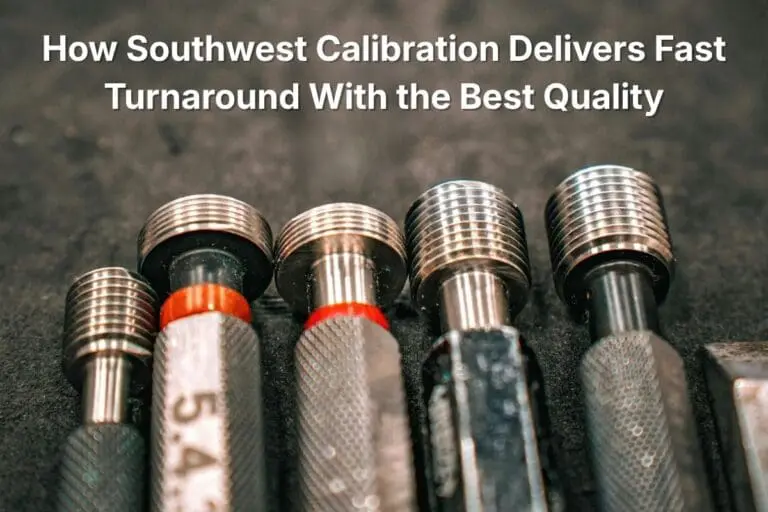
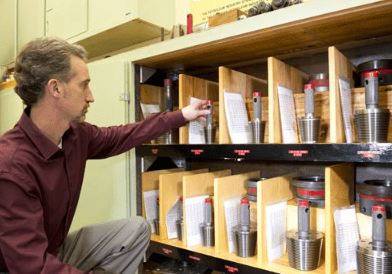
Thread gage calibration, for example, requires appropriate reference standards, technical expertise, and familiarity with specific thread forms and industry requirements.
Our article on specialized thread gage calibration explains why these instruments require additional expertise.
Southwest Calibration provides dimensional, electronic, temperature, pressure, torque, mass, hardness, and thread gage calibration through its Houston-area laboratory.
The company also coordinates services through qualified outside providers when necessary.
For manufacturers requiring replacement instruments, SWCAL supplies metrology equipment from leading manufacturers, including Mitutoyo, Fluke, TESA Technology, Gagemaker, HEMCO, and PMC Gage Companies.
This combination of calibration expertise and equipment sales gives customers a single point of contact for a broad range of measurement needs.
4. What documentation accompanies the calibration?
Calibration certificates provide essential evidence of equipment performance and measurement traceability.
For manufacturers preparing for customer or quality audits, incomplete records create problems even when the equipment itself performs correctly.
A calibration certificate should identify the instrument, document relevant measurement results, and include information supporting metrological traceability.
Traceability connects measurement results to appropriate references through a documented, unbroken chain of calibrations, each contributing to the associated measurement uncertainty.
When evaluating a laboratory, ask what information appears on its certificates and how customers receive and access their records.
Additional questions include whether the provider documents as-found and as-left results when applicable and offers reminders for upcoming calibration due dates.
Our article on common calibration findings that create problems during audits examines documentation gaps and other issues manufacturers should address before an assessment.
Southwest Calibration provides calibration with documented traceability to applicable reference standards, including NIST where appropriate.
The company also emails calibration recall notices to help customers monitor upcoming service requirements.
5. How quickly does the laboratory respond to requests?
A laboratory’s responsiveness during the initial quote process offers useful insight into its customer service.
Delayed quotes, incomplete information, and unclear service expectations create additional work for purchasing and quality teams.
Consider submitting the same equipment list and service requirements to several prospective providers.
Evaluate whether each laboratory:
- Responds promptly with a complete quote
- Requests the technical information necessary to assess the equipment
- Clearly identifies available services and limitations
- Provides realistic turnaround expectations
- Offers access to knowledgeable personnel when questions arise
The goal is to find a provider that communicates clearly before equipment arrives and remains accessible throughout the calibration process.
At Southwest Calibration, most quote requests receive a response the same day, with requests answered within 24 hours.
Manufacturers can reach the team at (281) 879-1713 or request a calibration quote online.
6. Does the laboratory offer onsite calibration?
Some measurement equipment is difficult, expensive, or impractical to transport.
Large ovens, surface plates, hardness testers, and installed instruments may require specialized handling or extended downtime when removed from a facility.
Onsite calibration allows technicians to perform appropriate services at the customer’s location, reducing the need to ship certain instruments.
Onsite capabilities vary by provider and equipment type.
Before scheduling service, confirm which instruments qualify, whether the work falls within the laboratory’s applicable accreditation scope, and what conditions must be available at your facility.
Manufacturers should also ask about scheduling availability, service call charges, travel expenses, and minimum service requirements.
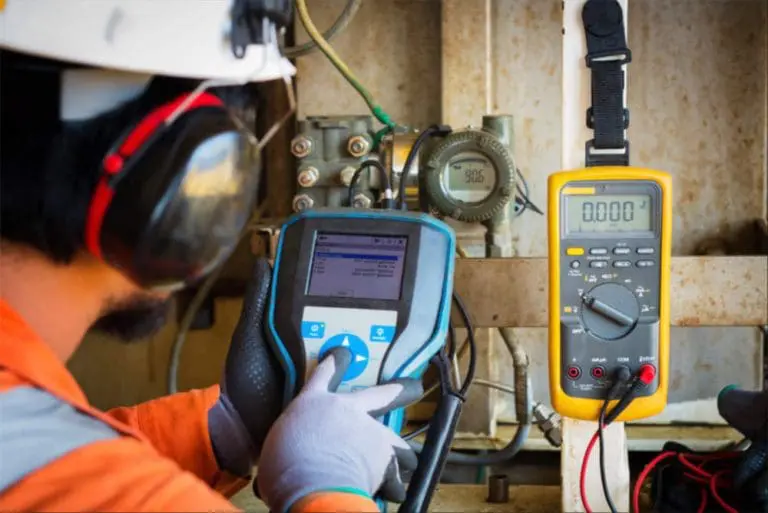
Southwest Calibration offers onsite calibration services for equipment including Rockwell hardness testers, optical comparators, pressure gauges and transducers, ovens, surface plates, and electronic instruments.
A service call charge applies within the Houston area, with mileage charges for locations outside the local service area.
For manufacturers throughout Greater Houston, SWCAL’s onsite calibration services offer an alternative to transporting large, installed, or difficult-to-move instruments.
7. Does the laboratory have relevant industry experience and service reach?
Calibration requirements vary across manufacturing environments.
An energy equipment manufacturer may rely heavily on specialized thread gages and pressure instruments. An aerospace supplier may have different dimensional measurement and documentation requirements.
A provider familiar with the equipment and standards used in your industry is better positioned to understand those technical demands.
Manufacturers should evaluate how long a laboratory has operated, which industries it serves, and whether its capabilities align with their applications.
Geographic reach also deserves consideration.
For organizations with multiple facilities, the ability to coordinate shipments and provide consistent service across locations may simplify calibration management.
Southwest Calibration Service has supported businesses across the energy, aerospace, pharmaceutical, chemical processing, and industrial manufacturing sectors since 1988.
Its laboratory in Stafford serves Houston and surrounding communities, while customers throughout the United States and internationally ship equipment to the facility for calibration.
The company’s technical experience includes specialized API thread gage calibration, supported by dedicated equipment, reference standards, and trained personnel.
What to prepare before requesting a calibration quote
Once you’ve identified potential calibration providers, preparing a complete equipment list helps them evaluate your requirements and provide accurate pricing.
Before requesting a quote, gather:
- Instrument types, manufacturers, models, and serial numbers when available
- Previous calibration certificates, if applicable
- Relevant customer specifications or quality requirements
- Upcoming calibration due dates and required completion deadlines
- Information about equipment requiring onsite service
Providing these details early helps reduce follow-up questions and allows the laboratory to identify any specialized requirements before scheduling.
Southwest Calibration’s online contact form accepts equipment lists in PDF, Word, Excel, or CSV format, with a maximum file size of 10 MB.
Select “Calibration Quote” when submitting your request.
Houston calibration lab FAQs
Choose an experienced Houston calibration partner
Selecting a calibration laboratory is an important decision for manufacturers that depend on accurate measurements, reliable equipment, and consistent quality documentation.
Southwest Calibration Service brings decades of technical experience to those requirements.
Since 1988, SWCAL has supported manufacturers with a broad range of calibration capabilities, specialized thread gage expertise, and access to precision measurement equipment from leading brands.
With ISO/IEC 17025 accreditation maintained continuously since 2007, an average turnaround of approximately five working days, and onsite service options for qualifying equipment, SWCAL offers Houston-area manufacturers a comprehensive resource for their calibration needs.
Whether you’re evaluating a new calibration provider, consolidating services, or preparing for an upcoming audit, Southwest Calibration Service can help you assess your equipment requirements.
Contact Southwest Calibration at (281) 879-1713 or request a calibration quote to discuss your needs. You can also explore our Houston calibration services for more information.
"*" indicates required fields